
Tree Pruning
We prune trees to keep them safe and in good health.
5.0 from 571 reviews
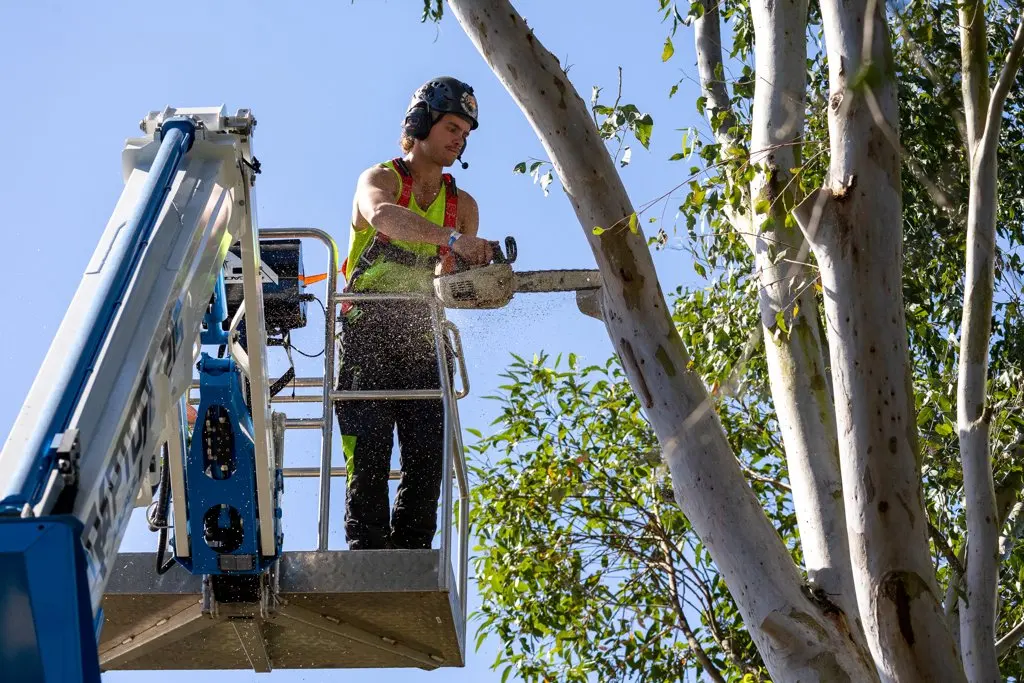
Tree pruning across Brisbane
Tree pruning is taking the right branches off a tree so it stays safe and keeps growing well. That's the whole job. The skill is in picking which limbs go, cutting them at the right point, and knowing when to stop.
We're Stump Grind It, a family crew based at Wishart. Troy started the business in 2015 with one stump grinder. His three boys helped on weekends, finished school, and came on full time. Stumps are still our specialty. Pruning came along because customers kept asking, and because you can't look after a tree properly if the only thing you ever do is take it out.
Most of our pruning calls come from homeowners. A gum has grown over the roof and the gutters fill every fortnight. A poinciana keeps dropping limbs on the driveway. A jacaranda has pushed so far over the fence line that the neighbour has stopped being polite about it. We also prune for landlords before an inspection, for body corporates with trees hanging over a carpark, and for businesses with staff parking under a big shade tree.
Brisbane yards make the problem themselves. Plenty of the blocks around Mansfield and Holland Park were carved up in the 60s and 70s, and people planted big shade trees close to a small house. Sixty years on, the house has a second storey, a deck and a pool, and the tree is 18 metres tall. The tree never moved. Everything around it did.
Then there's summer. Storms come through Brisbane hot and fast, and they find every weak fork in a canopy. A limb that's been cracked for two years comes down in about eleven seconds. Pruning before the season is a far quieter exercise than pruning after it.
Pruning is also the honest alternative to removal. A fair few trees we get called to look at don't need to come down at all. They need the deadwood out, weight off one side, and some clearance from the roof. We'll say so when that's the case, even though the removal would be the bigger job for us.
What people notice, and what's actually behind it
Dead branches up high
Grey, bare limbs with no leaf on them, usually in the top third of the tree. Gums do this constantly. The tree drops what it can't feed, then holds onto the dead wood until a gust or a cockatoo lets go of it. Deadwood over a driveway, a pool or a trampoline is easily our most common call.
A limb sitting on the roof
Leaves in the gutters, branches rubbing tiles, ridge caps working loose, and a handy bridge for possums and rats. Lifting those limbs clear, which we call crown lifting, sorts the rubbing and most of the leaf litter in one visit.
Cracked or hanging limbs after a storm
A limb half torn out and hanging by a strip of bark is a today problem, not a next-season problem. Same with a fork that's split open. Wind gets under it again and it finishes the job at three in the morning.
A canopy the wind can't get through
A tree carrying a solid wall of leaf behaves like a sail. Thinning takes selected inner branches out so air moves through the crown instead of shoving the whole thing sideways. Done properly you can barely pick it from the footpath, which is rather the point.
Branches over the fence, the shed or the pool
The neighbour conversation. You can generally prune to the boundary, and there are rules around how, so we'll walk the fence line with you before anything comes off. Same with limbs over a pool, where the leaf drop costs you all summer in filter cleaning.
A tree that's been topped before
Someone cut it flat years ago and now there are twenty or thirty shoots off the old wound. That regrowth is only attached at the surface, so it snaps easily in wind. We can bring it back to better-placed growth over a couple of visits, but you can't undo a topping in one go.
Why Brisbane in particular
It comes down to what's planted and what the ground does. Gums, figs, poincianas, jacarandas, camphor laurels and old mango trees make up most of our pruning work. The clay through Mount Gravatt East and Tarragindi sets hard in a dry winter, then holds water after a wet fortnight, so roots stay shallow and trees lean toward the light. Wet summers push soft, heavy growth that's poorly attached. Closer to the bay, around Capalaba and Alexandra Hills, canopies cop steadier wind with a bit of salt in it, so one side thins out and the weight ends up on the other. Older suburbs also carry decades of pruning history, some of it good, some of it done off a ladder with a hire saw on a Sunday.
One thing we'll always be straight about. If a branch is into the powerlines, that cut isn't ours. Conductors are Energex's job or an accredited line clearer's. We'll tell you which call to make.
How the job runs, from first call to done
The phone call
Troy usually answers. He'll ask what the tree is, roughly how tall, what sits under it, and whether we can get a chipper down the side. If you know the width of the side gate, that helps. Photos are handy too. We still come and look before we quote, because pruning quoted off a photo is how people end up arguing later.
The quote
We walk the whole tree, usually from a few angles, and check the things you can't see from the back deck: the union up high, the old wound on the trunk, the lean, what's hanging over the fence. Then you get a written scope. Which limbs come off, what stays, and whether the chip stays for your garden beds or goes with us. You get the price in writing before any work starts.
Permits and protected trees
Some trees are protected by council, and some blocks have vegetation conditions sitting on the title. We'll tell you what we reckon applies before we start. If it needs a permit, nothing gets cut until that's sorted. We check for wildlife before the job starts.
Booking in
We'll ring the day before to confirm, and again if we're running early.
Setting up
We knock first. Then we walk the yard with you, move the outdoor setting and the cars, and put bog mats or boards down if machinery is going over turf. If there's grinding in the job we locate underground services before anything digs in. Dogs are best inside while the chipper's running.
The cutting
One of the boys climbs, or we bring in the EWP, an elevated work platform, the thing most people call a cherry picker. Our spider unit gets through gates and up steps where a truck can't follow. Every cut goes back to a branch collar or to a lateral big enough to take over, so the wound seals and the tree keeps growing. No flush cuts, no stubs, no spikes in a tree we're keeping. As a rule we keep removal under about a quarter of the live canopy in one visit. Cut harder than that and you get a stressed tree throwing weak shoots, which is next year's problem rather than a fix.
Lowering the limbs
Anything over a pool, a shed, a fence or a glasshouse gets rigged and lowered on ropes instead of dropped. It's slower. It's also why nobody's tiles get broken.
Clean up
Branches go through the chipper, the yard gets raked, paths get blown off, and the lot leaves with us. If the chip is useful to you, say the word and we'll leave a pile by the beds. Clean up is the thing customers mention most in our reviews, so we're a bit precious about it.
The walk around
Before we leave, we walk it with you and show you what came off and why. If we've spotted something worth watching, like a fork we'd want another look at in a couple of years, you hear about it then. Not by surprise later.
Gear and standards
Climbing first. Our arborists work on rope and friction systems, with rigging ropes, slings and a lowering device for the heavy limbs. Top-handle saws up in the tree, bigger saws on the ground, pole saws for the reaches that don't justify a climb. Height gear gets checked before it goes on and replaced when it's due. Unglamorous, and not negotiable.
For the tall and awkward work we bring the EWP. An elevated work platform lets us get above a canopy and work down through it without loading the tree with a climber's weight, which matters on a tree that's already suspect. The spider EWP tracks through a side gate and across lawn on mats, so we can reach a back corner without a crane parked out on the street.
On the ground it's a chipper and a tipper, tarps over garden beds, and traffic gear when the work sits above a footpath. Everyone wears a helmet with eye and ear protection, and cut-resistant legwear on the saws.
On standards, we prune to AS 4373, the Australian standard for pruning amenity trees. In plain English, that document sets out where a cut belongs and what each type of prune is properly called, so crown thinning means the same thing to us as it does to a consulting arborist or a council officer. Work at height and saw work sit under the Queensland work health and safety rules. Services get located before ground machinery goes in. If you want our paperwork before we start, ask and we'll send it through.
Storm damage and urgent pruning
Our hours are 7 days, 6am to 6pm, and Troy answers the phone through those hours. Outside those hours, call any time for emergencies, 24 hours a day. Ring 0400 721 715 and you get a person, not a call centre.
After a big blow the phone goes flat out, so we sort the calls by risk. A limb hanging over a child's bedroom or a driveway jumps ahead of a branch lying on the lawn. If a tree is on the house or across the road, tell us on the first call, because it changes the gear we load.
Sometimes the right answer is a make-safe first. We take the hanger out, cut back whatever is under load, and come back for the proper prune and clean up once the street settles. Insurance jobs run the same way, except we photograph the damage before we touch it so you've got something to send the assessor.
Two things to leave well alone. Anything touching powerlines: ring Energex on 13 19 62 and stay back. Anything actively falling, or a tree over a person: 000 first, us second. And please don't climb on the roof with a pole saw to have a look yourself. We've been called in to fix the result of that more than once.
Why people go with us
The proof is in our Google reviews. They're five-star, built up since 2015, and the two things they keep repeating are the clean up and the straight quote.
Beyond that:
- Family run since 2015. Troy still quotes the jobs and still runs a grinder. The boys climb.
- Not a mowing crew with a hire saw in the ute.
- We prune to AS 4373, and we'll explain each cut in plain English before we make it.
- We'll tell you when a tree doesn't need the work. A prune instead of a removal is the smaller job for us, and we'd rather keep the tree in the ground.
- Stumps are the specialty, so if a tree does come out, the Wishart crew finishing it off is the same crew. One number, one yard to tidy, one invoice.
- Careful in a yard. Bog mats on turf, services located, wildlife checked, gates shut behind us.
- We work from our depot at Wishart and cover most of Brisbane and out to the bayside suburbs.
Got a limb over the house, a canopy full of deadwood, or a tree you're just not sure about? Ring Troy on 0400 721 715, or text your photos to the same number, and we'll come and have a look.
Frequently asked questions
What does tree pruning cost?
It depends on the tree, the access and how much is coming off. A gum over a pool is a different job to a small jacaranda out the front. Ring us on 0400 721 715 and we'll come and quote it properly. No hidden costs, and you get the quote in writing before we start.
When's the best time of year to prune?
For most trees around Brisbane, late winter into early spring works well. Flowering trees are better done just after they finish up. Safety pruning is a different thing. If a limb is cracked or hanging, that gets done now, not next season.
How much can you take off a tree?
Less than most people expect. As a rule we keep removal under about a quarter of the live canopy in one go. Cut harder than that and you get a stressed tree throwing weak regrowth. If a tree really needs more taken off, we'll explain why and usually stage it over two visits.
Do I need council approval to prune?
Sometimes. Councils protect certain trees, and some properties have vegetation conditions on the title. We'll tell you what we reckon applies before we start, and we won't touch anything needing a permit until it's sorted.
Do you clean up afterwards?
Yep, that's part of the job. Branches go through the chipper, the yard gets raked, paths get blown off and we take the lot with us. Want the chip for your garden beds? Say so and we'll leave a pile. Plenty of our reviews mention the clean up, so we're fairly proud of that one.
Can you get a limb off my roof after a storm, and how fast?
We run 7 days, 6am to 6pm, and for emergencies you can call any time, 24 hours a day. After a storm we sort calls by risk and get to the dangerous ones first. Often we'll do a make-safe straight away, take the hanger out, then come back for the full prune and clean up. Ring 0400 721 715 and tell us what's hanging and what's under it.
What if the branch is in the powerlines?
That's not our cut. Anything touching the conductors is for Energex or an accredited line clearer, so ring Energex on 13 19 62 and keep clear. We'll happily tell you over the phone which one you need, and we can handle the rest of the tree once the lines are dealt with.
Do you climb, or do you use a machine?
Both, depending on the tree. Our arborists climb on ropes for most jobs. For tall or suspect trees we bring the EWP, an elevated work platform, which is the machine most people call a cherry picker. Our spider unit fits through a side gate and up steps, so we can reach a back corner without a truck on the lawn.