
Arborist Reports
Arborist reports are a written, signed assessment of a tree, for council, a builder, an insurer or a solicitor.
5.0 from 571 reviews
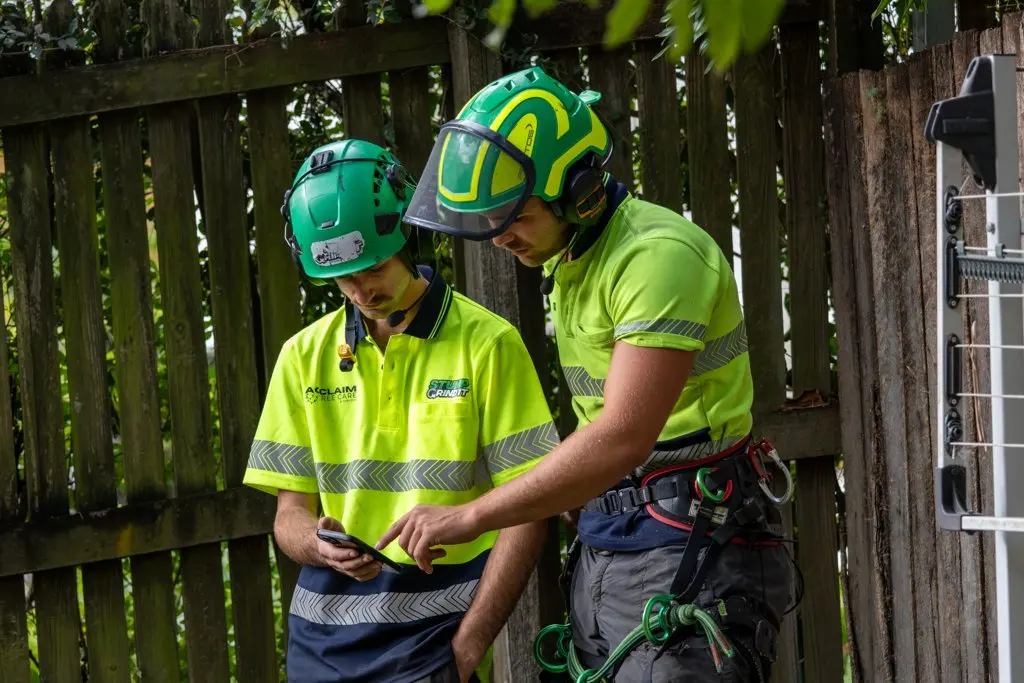
Arborist reports, in plain English
An arborist report is a written assessment of a tree. Species, size, condition, how likely it is to fail, and what we reckon should happen next. It gets signed, dated and written for whoever asked for it: council, a private certifier, a builder, an insurer or a solicitor.
Nobody wakes up wanting one. You get told you need one. Council knocks back a removal request because there's nothing behind it. The builder can't pour the slab until the tree protection is sorted. The insurer wants to know whether the limb that came through the carport was a fault in the tree or just a rough night of weather.
The report is the paperwork that lets someone make a decision. It isn't a pitch to take your tree out. Plenty of the ones we write say the opposite: keep it, take some weight off it, have another look in two years.
So who needs one around here? Homeowners with a protected tree they want gone or cut back. People knocking down and rebuilding on an old block. Buyers who want to know what that leaning gum behind the back fence is going to cost them in five years. Body corporates that need something on file before they spend owners' money. Builders and designers working around a tree they're not allowed to touch. And anyone in a polite disagreement with a neighbour about whose branches those are.
Brisbane gives us no shortage of reasons. The older pockets between Holland Park, Tarragindi and Mansfield were cleared and then replanted through the fifties and sixties. Those trees are sixty and seventy years old now, standing over houses that have been extended twice and re-roofed once. Out through Eight Mile Plains and Rochedale South it's the opposite problem: newer estates where a couple of big remnant gums were left standing, and the yard around them is now a third of the size it used to be. Put a council vegetation overlay over either situation and you can't touch a branch without a report.
We've been working Brisbane trees and stumps since 2015. Same family, same phone number. If it's the stump you're worried about rather than the paperwork, start on our Holland Park page instead.
What you're seeing, and what's actually going on
Almost every call starts with something somebody noticed. These are the ones that come up most:
- A lean that looks newer than it used to, often with cracked or lifted soil on the opposite side of the trunk.
- Mushrooms, or hard woody brackets, pushing out of the butt or the surface roots. That's usually decay that started years ago.
- Dead limbs up in the canopy with no leaves on them, grey and brittle.
- A tight fork with bark squeezed into it, slowly splitting apart.
- Roots lifting the path, the driveway or the shed slab.
- A limb that dropped on a still, hot afternoon with no wind at all.
- Termites in an old stump a couple of metres from the house.
- A crack, or a weep of dark sap running down the trunk.
The ground does a lot of the damage. Soils through Wishart, Mansfield and Upper Mount Gravatt are heavy clay. Clay swells in a wet summer and shrinks back in a dry winter, and the roots move with it. Two big wet seasons followed by a dry one is enough to change how a mature gum sits in the dirt, and that's often what people are seeing when they say the lean looks worse.
Building work does the rest. The single most common thing we write up is a tree that was perfectly fine until someone put a driveway, a pool or a granny flat on one side of it. Cut a third of the roots off one side and the tree doesn't die that week. It drops a limb, or lets go at the base, two or three years later. Fill dirt and concrete over the root zone do the same job more slowly. Roots want air and water in the top half metre of soil, and a slab takes both.
Then there's where the tree was planted in the first place. In the sixties nobody thought twice about putting a fig or a poinciana six metres off the house. That tree is now twenty metres across with surface roots under the slab and through the sewer. We chase those roots out regularly on the older blocks around Tarragindi and Holland Park, and when the tree is protected the report has to come first.
Old pruning shows up too. A tree that was topped twenty years ago grows a thick crown of regrowth off the cut, and that regrowth is only attached to the outside of the old wound. It looks healthy enough from the back deck. It isn't well attached. Storm season from November through March finds those ones.
Closer to the bay, through Capalaba and Alexandra Hills, wind exposure matters more. A tree that grew up sheltered in a row of others cops a lot more load the moment the neighbour's trees come out. We see that pattern over and over after a big removal next door, and it's one of the better reasons to get a report before anything comes down.
Age is the quiet one. Most of the gums, jacarandas and camphor laurels on this side of town went in during the same twenty-year window. They're reaching the back end of their useful life at roughly the same time, over much denser housing than existed when they were planted.
How the job runs, first call to finished report
No mystery to it. Here's what you'll actually experience.
It starts with the phone call, and the first thing we ask is what the report is for and who asked for it. That matters more than anything else you tell us, because a council removal application, a development application and an insurance claim all need different things in the document. If you've got a letter or an email from council, your certifier or your insurer, read it to us word for word. It saves everyone a second visit.
Then we book the inspection. We're on the tools 7 days, 6am to 6pm, so we'll give you a window that suits. You don't have to be home if there's side gate access and we can get to the tree, though it's better if you are, because half the useful information is what you've noticed over the years. When the limb dropped. When the driveway started lifting. Whether anything was dug near it.
On site we walk the whole tree, not just the bit you're worried about. Measurements go on paper: trunk diameter, height, canopy spread. We sound the trunk and the buttress roots with a mallet, check the root plate and the soil around it, and look hard at what sits underneath, which in this trade is called the target. A big dead limb over a chook pen is a very different risk to the same limb over a kid's trampoline. We take photos from set angles so they can be repeated later. If the canopy needs a proper look we climb it or put the spider EWP underneath, which is a tracked elevated work platform, a cherry picker that fits through a side gate.
A single backyard tree is usually under an hour on site. A row of eight for a development takes most of a morning.
Back at the desk we check what actually applies at your address: the council overlays, the protected tree rules, what's exempt and what isn't. Then we write it up in plain English with the photos and a site diagram where the job needs one. You get it as a PDF by email, so you can forward it straight to council, your certifier, your builder or your insurer.
If council or the certifier comes back with questions, we answer them. That's part of the job, not a new one.
If the recommendation is removal and you want us to do it, we quote that separately and you're under no obligation to use us. Plenty of people take the report and sit on it for a year. That's fine.
One thing we won't do is promise you an approval. A report sets out what's there and what we recommend. Council makes its own call, and anyone who guarantees the outcome before they've seen the tree is guessing with your money.
Gear, measurements and the standards we work to
The kit for this part of the work is simple, and we're fussy with it. A diameter tape around the trunk at 1.4 metres off the ground, which is the standard measuring height and gets written as DBH, diameter at breast height. Height and canopy spread measured rather than eyeballed. A nylon mallet for sounding: solid wood rings, decay thuds. A probe for soft pockets and old wounds. Binoculars for the upper canopy, then a climb or the spider EWP when the view from the ground isn't good enough.
Some trees need more than eyes, ears and a tape. If we think a trunk needs internal decay testing before anybody makes a call on it, we'll say so in the report instead of filling the gap with an opinion.
The standards that matter here:
- AS 4970-2009, Protection of trees on development sites. This is the one builders and certifiers care about. It sets the tree protection zone, the TPZ, and the structural root zone, the SRZ. In plain English: how much ground around the trunk has to stay untouched, and how much of that ground is actually holding the tree upright. The TPZ works out to twelve times the trunk diameter, and inside that circle you get fencing, no-dig conditions and supervision requirements.
- AS 4373-2007, Pruning of amenity trees. The cut types and limits councils expect when a report recommends pruning instead of removal. It's also the reason a proper report will never recommend topping a tree.
- Your local rules. Brisbane City Council protects vegetation through its City Plan overlays and the Natural Assets Local Law, which covers trees across suburbs like Wishart, Mount Gravatt East, Upper Mount Gravatt and Mansfield. Capalaba and Alexandra Hills sit under Redland City Council and its own vegetation rules. We check what applies at your street address before writing a word, because it genuinely changes block to block.
What you end up holding: species identification, dimensions, a health and structure assessment, how much useful life the tree has left, a risk rating against what sits under it, clear recommendations, dated photos, and a diagram where it's needed. Numbers, not adjectives.
If the report leads to removal and grinding, the care continues on the ground. Underground services get located before a grinder goes anywhere near a stump, and bog mats go down on soft turf so your lawn isn't a mess when we leave. Standard grind depth is 100 to 200mm below ground level, deeper when there's concrete, a pool or a new build going over the top. Most of the knockdown rebuild work we do sits around Eight Mile Plains, Rochedale South and Shailer Park, where a slab has to go in once the tree is gone.
When the tree can't wait
A report doesn't hold a limb up. If something has already failed, or looks like it's about to, the order of work changes: make it safe first, write it up afterwards.
Our phones are answered 7 days, 6am to 6pm, and we take emergency calls around the clock. On a bad storm night in February we're flat out like everyone else, so we'll be straight with you about when we can get there rather than leave you waiting on a maybe.
Two things worth knowing before we arrive. Take photos before anything gets cut, from a few angles, including the broken end of the limb. Insurers ask for them and we can't recreate them later. And keep people and cars out from under the canopy, including the part that's still up there.
If a tree is on powerlines, that's Energex first, not us. If it's across a road, or on a house with people inside, that's triple zero. Nobody worth hiring is going to climb a tree in a thunderstorm.
Once it's safe, the report follows in business hours. A post-failure report is a different document to a pre-removal one. It looks at why the tree let go, what was wrong with it beforehand, and whether what's left of it, or the neighbours' trees, are carrying the same fault. Insurers want that. So do solicitors, when a tree has come down over a fence line and two households have different views on whose problem it is.
Why people ring us for this
Troy started Stump Grind It in 2015 with one grinder, because tree crews kept finishing a removal and leaving the stump behind for somebody else to deal with. He saw the gap and filled it. Since 2015 it's still family-run. Troy's three boys grew up helping on weekends and now work in the crew, and Troy still turns up to quote and still runs a machine.
The two things people write about most in our Google reviews are that the price we quoted was the price, and that the yard was left tidy. That carries into the report side of the work. Fixed quote, no surprises on the invoice, and the paperwork turns up when we said it would.
We also do the whole job, which saves you chasing contractors. One crew looks at the tree, writes the report, and if the answer is removal we take it down, grind the stump below ground level and clean up behind us. No handover, no second mob, no argument about who left the mess on the driveway.
One honest note to finish on. Councils want reports from someone with the right arboricultural qualifications for the job in front of them, and what's required for a single backyard removal is not what's required for a 40-lot subdivision. Ring us, read us what the letter says, and we'll tell you straight whether we're the right crew for it. If we're not, we'll point you at someone who is. We'd rather lose the job than take your money for paperwork that gets knocked back.
Give Troy a call on 0400 721 715, 7 days, 6am to 6pm, or have a look at stumpgrindit.com.au. Tell us the suburb and exactly what's been asked of you. We're based in Wishart, so Mansfield, Mount Gravatt East and Eight Mile Plains are about five minutes up the road.
Frequently asked questions
What is an arborist report, and how do I know if I need one?
It's a written, dated assessment of a tree: what it is, how big it is, what condition it's in, the risk it poses and what we recommend. You usually need one when a council, a private certifier, a builder, an insurer or a solicitor asks for one. If you're not sure, ring us and read out what you've been sent. We'll tell you in a minute whether a report is the right thing.
How much does an arborist report cost?
It depends on the tree, the access and what the report has to cover. One backyard gum is a different job to eight trees on a development site. Ring 0400 721 715, tell us the suburb and what's been asked of you, and we'll give you a straight price. No hidden extras.
Will the report get my tree removal approved?
We can't promise that, and nobody honest will. The report sets out what's actually there and what we recommend. Council makes its own decision. What we can do is make sure the document says what it needs to say, backed by measurements and photos instead of opinions.
How long does it take?
We'll give you a date for the inspection when you call, and a date for the written report when we book it in. Then we stick to it. If you're up against a council or certifier deadline, say so on the phone and we'll work to it.
Do I need to be home for the inspection?
Not if there's side gate access and we can reach the tree. It's better if you are, though. Half the useful detail is what you've noticed over the years: when the limb came down, when the driveway started lifting, whether anything was dug near the trunk.
My builder is asking about a TPZ. Can you sort that?
Yes. TPZ means tree protection zone, the circle of ground around a tree that has to stay undisturbed during building work, worked out under AS 4970-2009. The report sets out the TPZ and the structural root zone, plus the fencing and no-dig conditions that go with them, in a form your certifier can use.
A limb has come down on my roof. What do I do first?
If it's on powerlines, call Energex. If it's on the house with people inside or across a road, call triple zero. Otherwise take photos before anything is cut, keep everyone out from under the canopy, then ring us on 0400 721 715. We answer 7 days, 6am to 6pm, and take emergency calls around the clock. We make it safe first and write the report afterwards.
If the tree has to go, can you do the removal and the stump too?
That's the main reason people use us. One crew assesses the tree, writes the report, removes it, grinds the stump 100 to 200mm below ground level and cleans up behind. Services get located first and bog mats go down on soft turf. You're under no obligation to use us for the work, and the removal is quoted separately.