
Arborist Services
Arborist services cover the tree work that sits either side of the grinder.
5.0 from 571 reviews
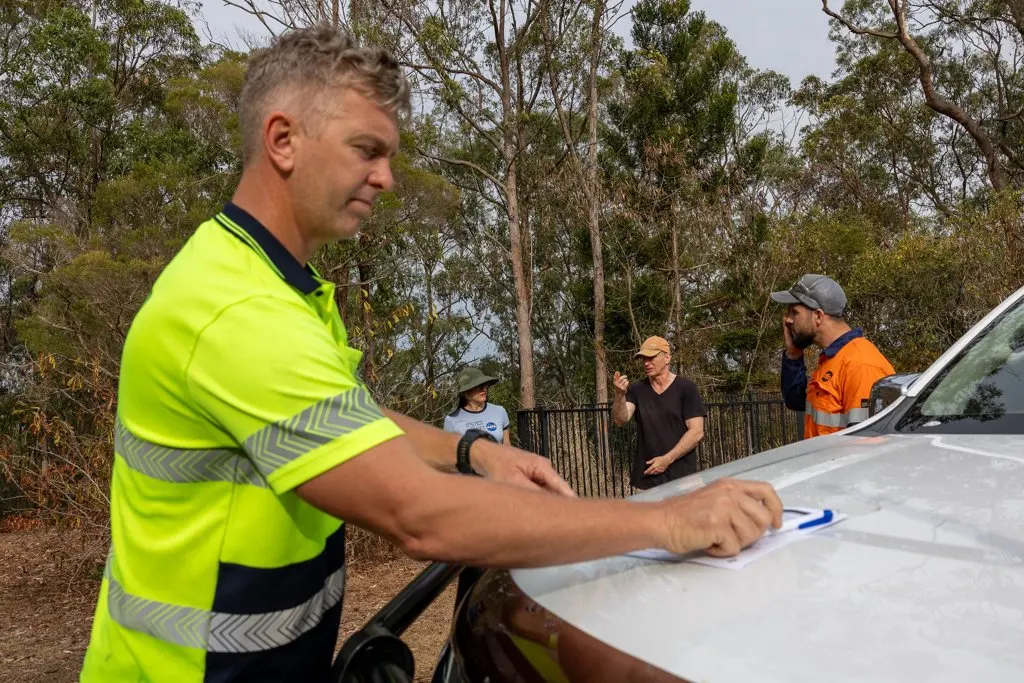
Tree work where someone looks first
Troy started Stump Grind It in 2015 with one grinder and a ute. His three boys have finished school and the crew handles whole trees as well as stumps. Grinding is still the specialty. Most weeks, though, we're also up a tree or in a basket sorting out the job that comes before the grinder.
The word arborist gets thrown around a fair bit, so here's what it means on our jobs. We assess before we cut. That means the structure of the tree, the deadwood up top, the unions where the big limbs meet the trunk, the root zone, and what's sitting underneath if a limb lets go. Then we tell you what the tree actually needs. Sometimes that's a full removal. Plenty of times it's a selective prune and you keep your shade.
Who rings us? Homeowners on the older blocks around Brisbane, mostly. Body corporates. Property managers with a tenant complaining about branches scraping the roof. Builders who need a tree gone before the slab goes in. Agents tidying a place up before it goes on the market.
Brisbane is full of trees that were exactly the right size in 1978. Gums, figs, poincianas, jacarandas and mangoes, all put in when the house went up. Forty odd years later they're over the roofline, over the fence, and over the neighbour's carport. The blocks haven't grown. The trees have.
Then there's the weather. Storm season runs roughly November to March and it does the same thing every year. A southerly comes through, the weak limb that's been hanging on for three summers finally goes, and the phone starts ringing. Out towards the bay the ground is sandier and there's salt in the wind, which changes how a tree holds itself up. You see it on jobs around Capalaba and Alexandra Hills. Further inland it's heavier clay, steeper backyards, retaining walls and stairs in the way, which is the usual story on a Holland Park or Tarragindi block.
Our depot is at Wishart and we cover most of Brisbane and out to the bayside suburbs.
What you're seeing, and what's behind it
Most people don't ring an arborist because they've been reading about tree health. They ring because something's changed and it looks wrong. Here's what comes up most, and what's usually causing it.
Limbs dropping with no warning. Eucalypts shed limbs. It's normal behaviour, and it gets worse in a hot dry stretch because the tree drops weight it can't keep watered. The limb that lands on your shed roof was often dead for two seasons before it fell. You just couldn't see it from the ground.
The tree's leaning since the rain. Wet clay plus a shallow root plate is a bad combination, and Brisbane has plenty of both. When the soil turns to mud, the roots lose their grip on one side. A lean that appears after heavy rain is worth a look quickly, because soil heaving at the base tells us more than the angle of the trunk does.
Roots lifting the path, the driveway or the slab. Figs, poincianas and jacarandas send roots out wide and shallow rather than down. Concrete cracks, pavers tilt, and the mower catches every single time. This is where root chasing comes in, and it's a separate job to grinding the stump itself.
A split or a crack in a big fork. Where two heavy limbs meet at a narrow angle, bark gets trapped in the join and the union never fuses properly. It holds for years, then one wet windy night it doesn't. Often the tree was topped decades ago, and the regrowth that shot out of the cut is all hanging off that same weak point.
Branches on the roof and gutters that never stay clear. Common on the 1960s and 70s brick and tile stock through Mansfield and the suburbs around it, where a tree planted in the middle of the yard has caught up with the house. Constant rubbing lifts tiles and wears out the ridge capping.
The whole yard's in shade and the lawn's given up. Not a safety problem. Still a real one. Usually sorted with a crown lift or a thinning prune rather than losing the tree altogether.
Fungus at the base, or a hollow sound when you knock. Bracket fungus at the butt of the trunk means decay inside. That's a proper assessment job, because a tree with a hollow base can look perfectly healthy up in the canopy right until it fails.
Access has got tighter. Newer estates around Eight Mile Plains and Rochedale South are built close to the boundary, so the side gate is narrow and there's nowhere to drop anything. That's a rigging job, not a fell-and-chip job, and the quote reflects it.
How the job runs, first call to done
No mystery to it. Here's what you'll see.
You ring 0400 721 715 and you'll usually get Troy. Tell him what the tree's doing and roughly where it sits. Photos help a lot, especially of the side access, so send a couple through if you can. That way we turn up with the right machine instead of the wrong one.
Then we come and look. That's a proper site visit, not a drive-by. We walk the block, look up into the canopy, check the base and the root zone, and work out how we're getting gear in and debris out. We'll measure the side gate if it's tight. We look at what's under the tree too: the pool, the shed, the neighbour's colorbond, the sewer line. If a selective prune will fix the problem, we'll say so rather than sell you a removal.
Council gets checked at this stage. Some trees need approval before anyone touches them, depending on the council, the species, and whether the property sits in a vegetation overlay. We'll flag it while we're standing there and point you to the right form. We don't cut anything that needs approval until the paperwork's sorted.
You get a written price. It covers the work, the clean-up, and the stump if you want it done. No hourly creep.
Once you book, we do the prep. Underground services get located before any machine goes into the ground, so we're not putting a grinder wheel through a water main or a comms line. If the job sits in a known koala habitat area, we take extra care and check for wildlife before anything comes down. If we're going to be loud early, or we need to get near a boundary, we let the neighbours know.
On the day the crew turns up, walks you through the plan, then sets up. Drop zone marked and roped off. Bog mats down if the turf's soft. A climber goes up on ropes, or the spider EWP goes in if that suits better. EWP means elevated work platform, the same thing as a cherry picker, just on tracks so it fits through gaps a truck never would.
Then it comes down in sections. Rigged and lowered rather than dropped, anywhere near a structure. Branches go through the chipper, timber gets cut and loaded out, and the grinder comes in for the stump. Standard depth is 100 to 200mm below ground level, deeper if you're laying concrete, putting in a pool or building over the top. Tell us what's going there and we'll grind to suit.
Last bit is the clean-up, and it's the part customers mention most. Chips barrowed out, or left as mulch if you want them. Lawn raked, paths blown down, gates shut. Then we walk the job with you before we leave, so if something's not right you can tell us while we're still standing in the yard.
The gear, and the standards we work to
Access is nearly always the hard part on a Brisbane job, so we carry a range rather than one machine.
Narrow walk-behind grinders that fit most standard side gates, and go up and down steps. Bigger tracked grinders for open blocks and heavy root systems. A spider EWP on tracks for canopy work where a truck-mounted lift can't get in. Climbing and rigging kit for everything else: ropes, slings, blocks and lowering devices, so big sections come down under control instead of getting thrown. Chipper and tipper on site so the debris leaves with us.
Bog mats go under the machines on soft ground. Ruts across a lawn take months to come back, and we'd rather spend ten minutes laying boards than leave you with a repair job.
The standards side is straightforward. Pruning follows AS 4373 Pruning of Amenity Trees, which sets out proper cuts and the difference between a crown lift, a crown thin and a reduction. That's the document that says topping a tree isn't pruning. Where we're working around trees on a building site, AS 4970 Protection of Trees on Development Sites covers the protection zone around the trunk and roots. Chainsaw work follows AS 2727 Chainsaws, Guide to Safe Working Practices.
Underground services get located through the Before You Dig Australia process on any grind. Anything inside the exclusion zone around a live powerline is a job for an Energex approved crew, and we'll tell you straight if that's what yours needs rather than have a go at it.
If your body corporate, insurer or builder wants our paperwork before we start, ask and we'll send it through.
When it can't wait
Our hours are 7 days, 6am to 6pm. Outside those hours, call any time for emergencies, 24 hours a day. For anything else, leave a message and we call back first thing.
Inside those hours, storm jobs jump the queue. Through summer that's most of what the phone is about. A limb hung up in the canopy. A tree across the driveway. Half a gum leaning on a fence after a big blow. We'll get someone out to make it safe, which usually means taking the hazard down and clearing enough for you to use the yard and get the car out. The tidy-up and any remaining work can be booked in later that week.
What to do before we get there. Keep everyone well clear, pets included, and don't stand under a hung-up limb even if it looks settled. If anything is touching or close to a powerline, stay away from it and ring Energex, not us. If someone's hurt, ring 000 first. And don't climb up on the roof to have a look.
If your insurer wants it in writing, say so when you book. We'll note down what we found, what we did and why, so you've got something to send them.
Storm season is also the best time to get ahead of it. A deadwood removal in September is a much smaller job than a make-safe in January. We're quieter over winter, so bookings move faster then too. Same goes for the stump left over from an old removal, whether that's a Tarragindi backyard or a rental out at Shailer Park.
Why people ring us
Our five-star Google reviews are what we're proudest of, and the same things come up in them over and over: no hidden costs, a written quote up front, and the clean-up.
Since 2015, and the same family running it. Troy still quotes the jobs and still runs a grinder. He'd rather explain what a crown lift is than talk over the top of you. His three boys work in the business. You'll meet the people doing the work, not a salesman.
One crew for the whole job. Tree down and stump out on the same visit, so you're not chasing a second mob a fortnight later to finish off what the first lot left behind. That gap is exactly why Troy started in 2015. Tree crews didn't want to leave anyone behind to grind.
A written quote before we start. We look at the job and give you the quote in writing before any work starts.
We'll also tell you when a tree doesn't need coming down. Plenty of the trees we get called out to just need the deadwood out and a bit of weight off one side. Saying so costs us a bigger invoice and keeps you as a customer, which has worked out fine so far.
Careful with the yard, every time. Bog mats on turf, services located before we grind, neighbours told before we start, and the whole site raked and blown down at the end.
Ring Troy on 0400 721 715 for a look at your tree, or send a photo of the access through and we'll tell you what's possible. We cover Brisbane, including Mount Gravatt East, Upper Mount Gravatt, Sunnybank Hills and the bayside suburbs.
Frequently asked questions
What does an arborist do that a general tree lopper doesn't?
We assess the tree before we cut it. That means the structure, the deadwood, the unions where the limbs meet, the root zone and what's around it. Sometimes the answer is a selective prune rather than a removal. Lopping just takes the top off, and it often leaves a weaker tree behind with regrowth hanging off the old cuts.
What does a tree removal cost?
It comes down to size, access, what's underneath and whether the stump goes too. We won't guess over the internet. Ring Troy on 0400 721 715, we'll come and look, and you'll get a written quote with no surprises on the invoice.
Can you get a tree out of a backyard with no truck access?
Usually, yes. We rig sections down by rope and barrow or carry them out through the side gate. Our spider EWP runs on tracks, so it fits through narrow gaps a truck-mounted lift can't. Send a photo of the access and we'll tell you what's possible before anyone comes out.
Do I need council approval to remove a tree?
Sometimes. It depends on your council, the species, and whether the tree is protected or sits in a vegetation overlay. We'll flag it when we quote and point you to the right form. We don't cut anything that needs approval until it's sorted.
Do you grind the stump after the removal, or is that a separate crew?
Same crew, same visit if you want it. Grinding is what we started with in 2015. Standard depth is 100 to 200mm below ground level, and we go deeper if you're pouring concrete, putting in a pool or building over the top. Just tell us what's going there.
Do you clean up afterwards?
Yep. Branches chipped, timber loaded out, lawn raked and paths blown down. On soft turf we put bog mats under the machine so we're not leaving ruts behind. Most customers say the clean-up is the bit they remember, and it shows up in the reviews.
Can you come out straight after a storm?
We'll do our best, and storm jobs jump the queue. Our hours are 7 days, 6am to 6pm, and for emergencies you can call any time, 24 hours a day. Keep everyone clear of the tree, stay away from anything near a powerline and ring Energex for that, then call us on 0400 721 715.
What about a tree that's touching the powerlines?
Work inside the exclusion zone around a live line has to be done by an Energex approved crew, so we'll tell you straight if that's what yours needs. Plenty of jobs sit outside that zone and we can handle them. We'll work it out when we look at the tree.
Which suburbs do you cover?
We work out of our depot at Wishart and cover Mansfield, Holland Park, Tarragindi, Mount Gravatt East, Upper Mount Gravatt, Eight Mile Plains, Sunnybank Hills, Rochedale South, Shailer Park, Capalaba and Alexandra Hills. Not sure if you're in range? Give us a call.